
The client & summary
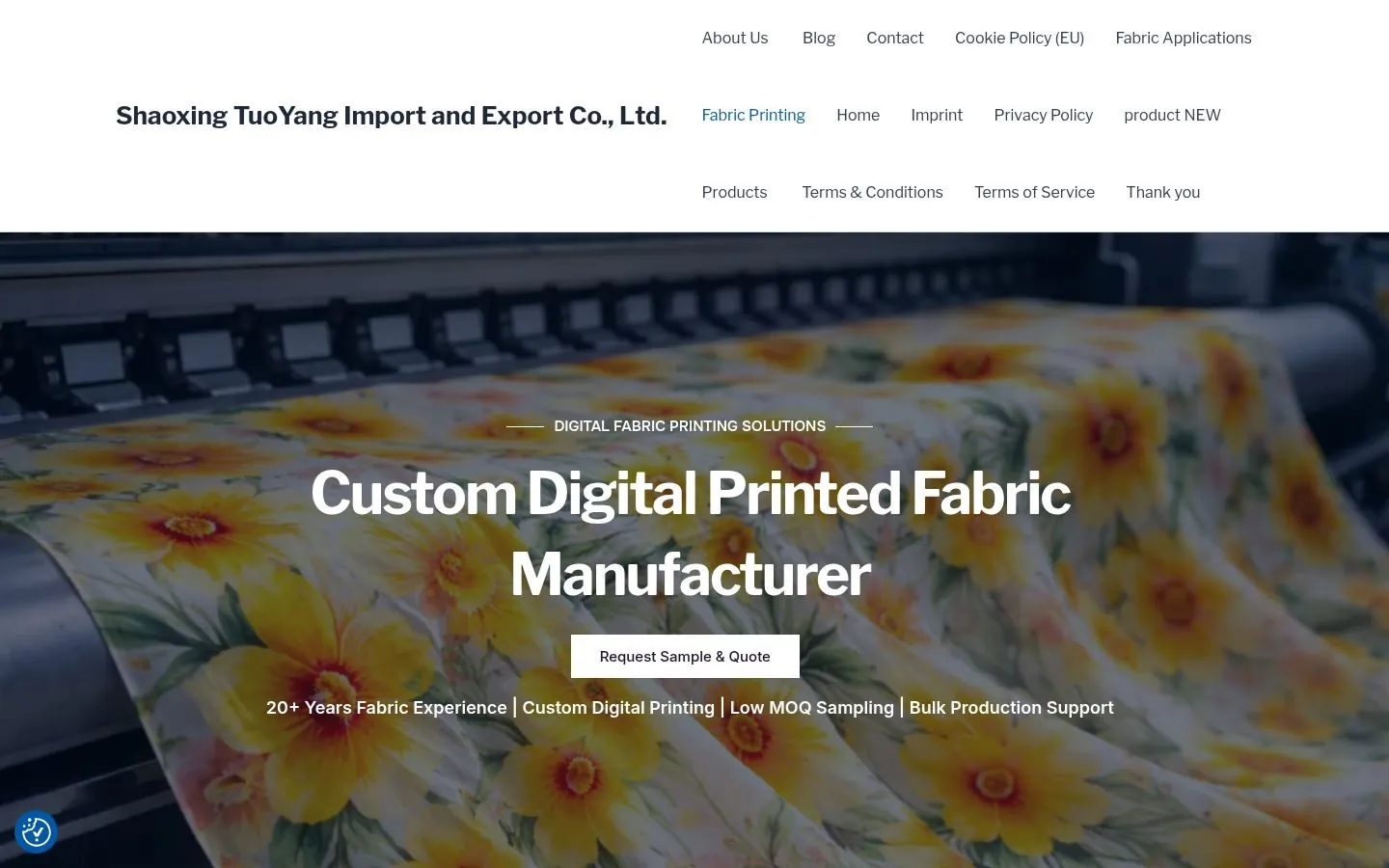
Tuoyang Textile is a digital textile printing manufacturer serving international B2B buyers such as fabric wholesalers, importers, distributors and garment manufacturers. The core objective was a professional fabric printing landing page inside its existing website, followed by a Google Ads setup to generate qualified B2B leads.
The challenge
The page had to look trustworthy to wholesale buyers: simple, clean and industrial rather than like a fashion brand. The client wanted buyers to stay longer and understand the company's strengths, and later, the page had to convert paid traffic while filtering out retail and hobby buyers.
Our solution
Our team built the landing page in March and April 2026 and set up Google Ads with a landing page optimisation in June 2026.
Discovery and scope
The brief asked for a new SEO-friendly page within the current website, built on a staging site first and then moved into the live site once approved.
Design
The first draft was ready on 14 March 2026. The first revision followed the client's schedule document and a video of the digital printing process. From the second round the focus moved from wording to visual coordination, so sections felt consistent with each other and spacing was even. In the fifth round the hero image was resized so the printing machine is visible, and a cropped photo was corrected.
Build and launch
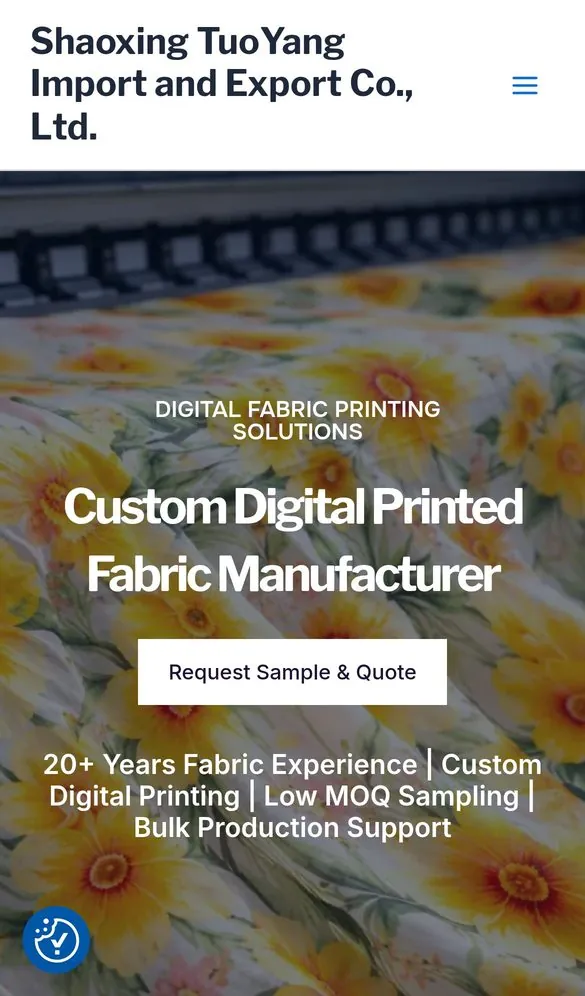
The page runs on WordPress with Elementor and presents capabilities, the printing process, production equipment and inquiry calls to action. After six revision rounds it was integrated into the client's live site on 8 April 2026.
Phase two: Google Ads and optimisation
From 10 June 2026 our team set up Google Ads aimed at wholesalers, importers, distributors, garment manufacturers, sourcing companies and fashion brands, while excluding retail and small-order buyers. The landing page was optimised to be more conversion-focused, conversions were set up and unnecessary scripts were removed.
Challenges we solved
Visual consistency over many rounds: aligning sections, spacing and imagery so the page reads as one coherent B2B story.
Section by section
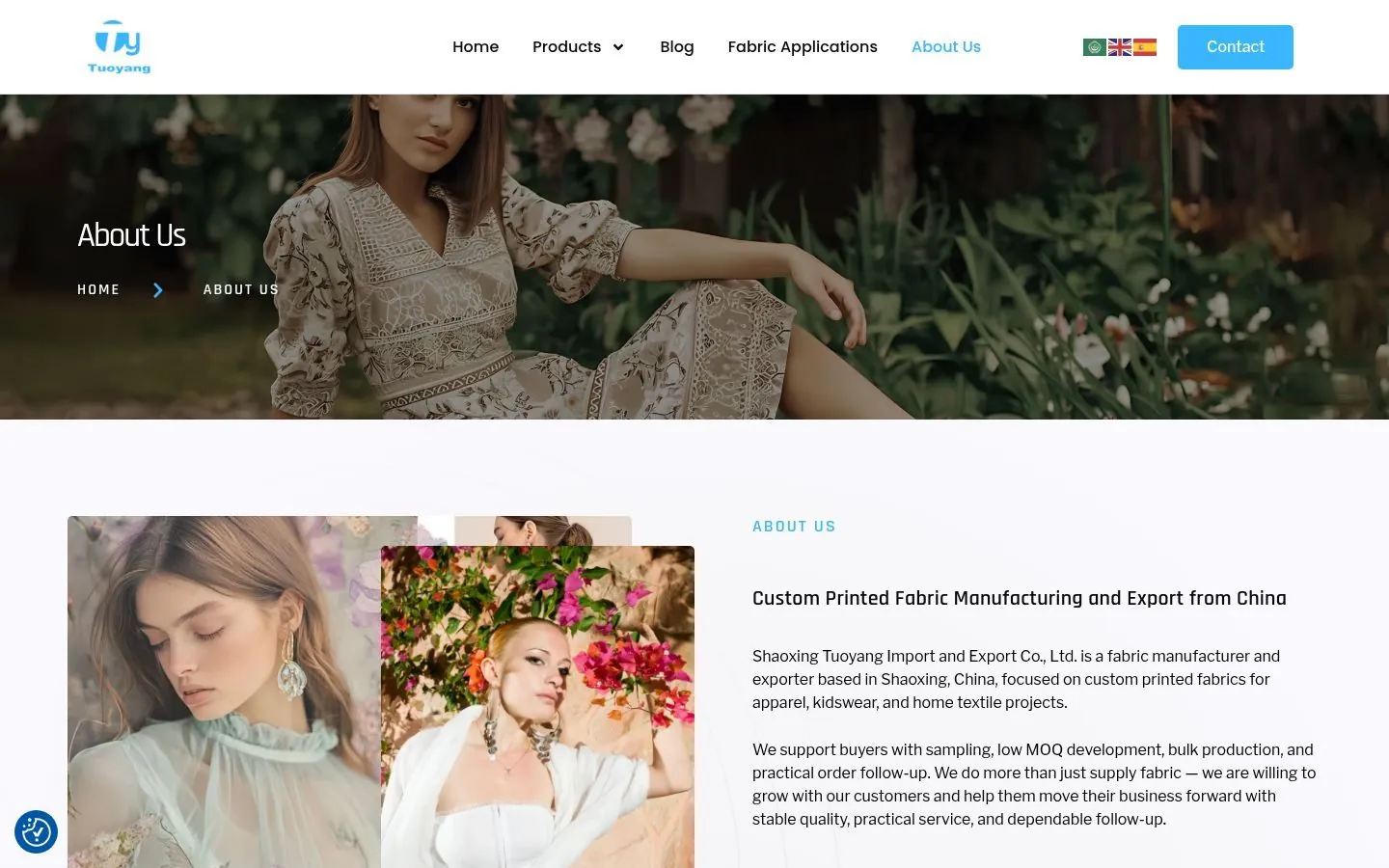
The brief defined the landing page structure: a hero with headline and short intro, a short background on the company's fabric printing experience, a visual section on the digital printing process, key advantages, applications and a contact or sample request section. The key advantages are low minimum order quantities, in-house printing and colour accuracy, and the applications include apparel, kidswear and home textiles.
Staging first, then live
The page was built in a sandbox so the client could review it without affecting her live website. Once approved, it was moved into the existing site at tuoyangtextile.com as a new, SEO-friendly page, alongside the existing imprint and privacy policy. The contact form was set up to be GDPR compliant.
Designed for wholesale buyers
Every design decision followed the goal of looking professional and trustworthy to B2B buyers: a simple, clean layout, restrained colours and clear calls to request samples or send an inquiry, rather than the look of a fashion label.
Technology stack
- WordPress
- Elementor Pro
- Google Ads
- Conversion tracking
- Responsive design
Results
- Fabric printing landing page live inside the client's site on 8 April 2026.
- Sections for capabilities, printing process, equipment and inquiries.
- Google Ads campaigns targeting B2B buyer types, set up in June 2026.
- Conversion tracking in place and unnecessary scripts removed.
Frequently asked questions
Who is the Tuoyang landing page for?
International B2B buyers such as fabric wholesalers, importers, distributors, garment manufacturers and sourcing companies.
How long did the project take?
The landing page took about four weeks (March to April 2026); the Google Ads setup and optimisation followed in June 2026.
How are retail buyers kept out of the ads?
The campaigns target B2B buyer types and actively exclude retail customers, small orders and hobby buyers.
Which platform is the page built on?
WordPress with Elementor, as a page inside the existing website.
Were conversions tracked?
Yes. Conversion tracking was set up as part of the Google Ads work.
Looking for a similar solution?
We combine websites, campaigns and automation to grow your pipeline. Tell us about your goals.
Comments